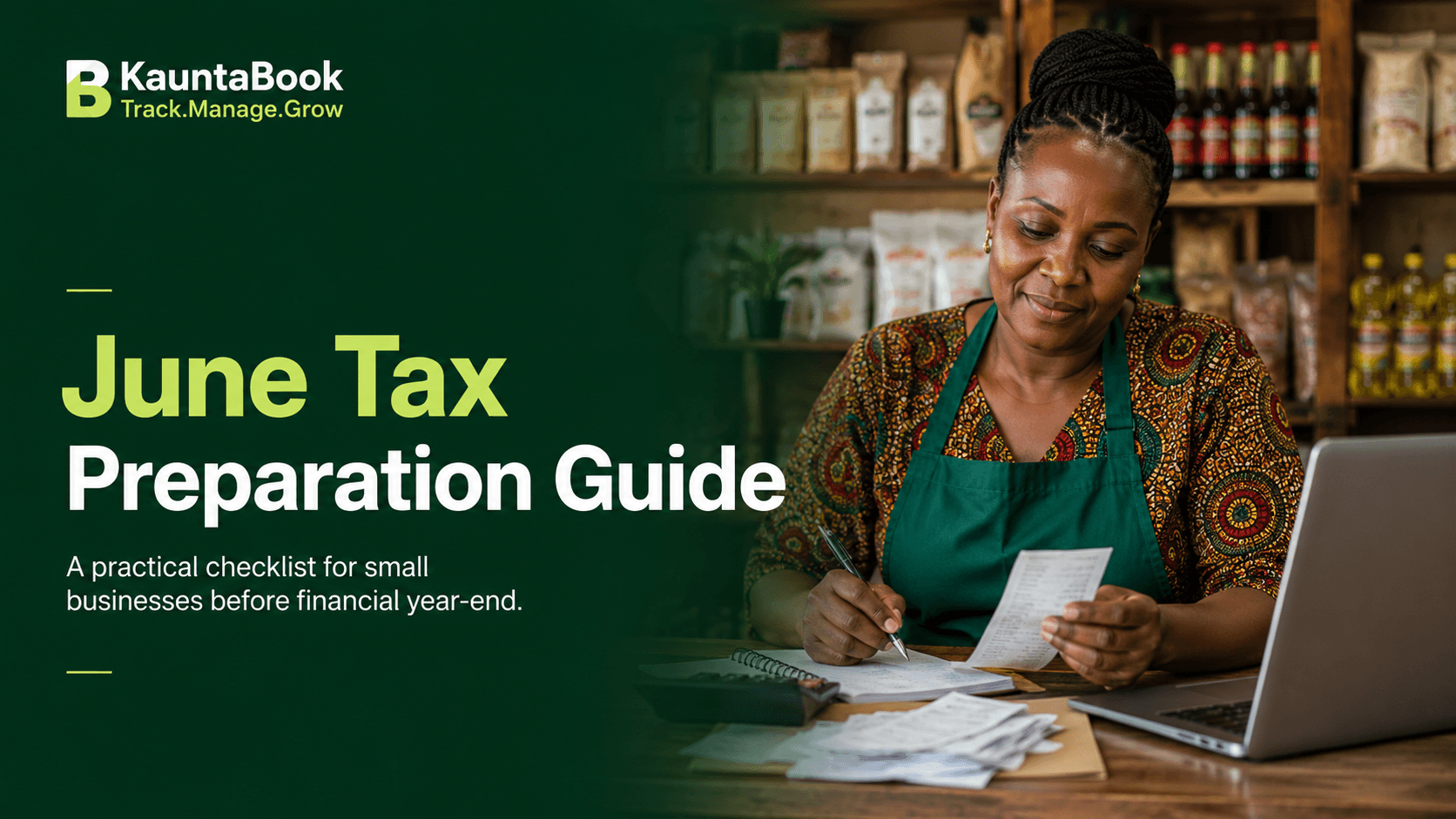
Many business owners only start thinking about taxes when deadlines are approaching. Unfortunately, waiting until the last minute often leads to missing records, inaccurate figures, and unnecessary stress.
June is an excellent time to review your business records, reconcile transactions, and ensure your financial information is complete before filing obligations arise. Whether you run a retail shop, service business, farm enterprise, or trading company, preparing early can save both time and money.
Why Tax Preparation Matters
Good tax preparation is not simply about complying with regulations. It also gives business owners a clearer understanding of how their business is performing.
When records are accurate, it becomes easier to:
- Determine profitability
- Identify unnecessary expenses
- Track customer balances
- Monitor inventory levels
- Prepare financial reports
- Make informed business decisions
Businesses with organized records spend less time searching for information and more time focusing on growth.
Step 1: Review Your Sales Records
Start by ensuring that all sales made throughout the period have been recorded.
Check:
- Cash sales
- Mobile money transactions
- Bank transfers
- Credit sales
Missing sales records can result in inaccurate reports and make it difficult to determine actual business performance.
If multiple people handle sales within the business, confirm that all transactions have been captured correctly.
Step 2: Organize Your Expenses
Many businesses lose track of expenses throughout the year.
Gather records relating to:
- Rent
- Utilities
- Transport
- Fuel
- Salaries and wages
- Inventory purchases
- Equipment purchases
- Marketing expenses
Even small expenses can add up significantly over time. Accurate expense records provide a more realistic picture of profitability.
Step 3: Reconcile Customer Debts
Outstanding customer balances should be reviewed regularly.
Ask yourself:
- Which customers still owe money?
- How much is outstanding?
- How long have the balances been unpaid?
Updating customer balances before preparing reports helps ensure your records reflect the true financial position of the business.
Step 4: Verify Supplier Balances
Just as customers may owe your business money, your business may also have obligations to suppliers.
Review:
- Unpaid supplier invoices
- Pending purchases
- Advance payments made to suppliers
- Outstanding balances
This helps prevent surprises and improves cash flow planning.
Step 5: Count Your Inventory
Inventory represents money invested in stock.
Conduct a physical stock count and compare it with your records.
Pay special attention to:
- Fast-moving products
- Damaged stock
- Expired items
- Missing inventory
Accurate inventory records improve both profitability analysis and business planning.
Step 6: Review Bank and Mobile Money Transactions
Bank and mobile money records often reveal transactions that may have been forgotten.
Compare your records against:
- Bank statements
- Mobile money statements
- Merchant payment records
Any discrepancies should be investigated and corrected before generating reports.
Step 7: Generate Financial Reports
Once your records have been updated, generate reports that summarize business performance.
Useful reports include:
- Sales reports
- Expense reports
- Profit and loss statements
- Inventory summaries
- Customer debt reports
These reports help you understand where the business stands and identify areas that need improvement.
Common Mistakes to Avoid
Many small businesses make the same mistakes during tax preparation:
- Waiting until the last minute
- Losing receipts
- Mixing personal and business expenses
- Failing to track customer debts
- Ignoring inventory records
- Not reconciling transactions
Avoiding these mistakes can significantly reduce the stress associated with compliance and reporting.
The Value of Good Record Keeping
Tax preparation becomes much easier when records are maintained consistently throughout the year.
Instead of spending days searching for receipts and reconstructing transactions, businesses with organized records can generate reports quickly and confidently.
Good record keeping does not only help during tax season. It supports better decision-making, improves financial visibility, and creates a stronger foundation for business growth.
Final Thoughts
Preparing for tax obligations should not be a once-a-year activity.
Businesses that record sales, expenses, inventory movements, and customer balances consistently throughout the year are better positioned to remain compliant and understand their financial performance.
The sooner you begin organizing your records, the easier tax preparation becomes.